Kate Aldrich giving a recital at a small college 3 miles from where I now live struck me as a miracle of the universe, an event against the laws of natural scheduling, a visitation which I was undisposed to question. I regret to say that, despite the recital's advertisement in symphony playbills and elsewhere, the residents of greater Harrisburg did not turn out in force. Aldrich, however, gave a generous and richly varied program, and engaged the small audience with great warmth. Not having heard Aldrich since her 2010 Met Carmen, I was pleased to get a sense both of the bel canto works she's been recently exploring, and the French romanticism into which, it seems, she is moving. And in one thing the provinces could give the audiences of New York an education: not once was there applause before the end of a set, nor did a single cell phone make itself heard. [Note: this recital took place on February 4th (sic!) and being unusually under academic deadlines, I neglected to give it its finishing touches till now. Gentle Readers, I beg your indulgence.]
Showing posts with label Lieder. Show all posts
Showing posts with label Lieder. Show all posts
Friday, April 7, 2017


Thursday, February 2, 2017
Reading Round-Up: Beating the Winter Blues
Winter and my dissertation revisions both seem endless at the moment, so my first Reading Roundup focuses on sensual poetry, superb pianism, and sexy mezzo singing.
Definitely the Opera is always worth reading, and the latest piece there explores Lieder, language, and nineteenth-century musical interpretations of Sappho.
Because we all should think about Mitsuko Uchida more often, here's Boulezian's thoughtful review of her recent Mozart/Schumann concert.
Lastly, Marie-Nicole Lemieux illuminated the ever-enigmatic Carmen in Paris, and Operatraveller tells us about it. I was pleased to hear that Michael Spyres made a convincing Don José at her side, since I haven't heard much of him since reviewing his calling-card album, which I enjoyed.
Definitely the Opera is always worth reading, and the latest piece there explores Lieder, language, and nineteenth-century musical interpretations of Sappho.
Because we all should think about Mitsuko Uchida more often, here's Boulezian's thoughtful review of her recent Mozart/Schumann concert.
Lastly, Marie-Nicole Lemieux illuminated the ever-enigmatic Carmen in Paris, and Operatraveller tells us about it. I was pleased to hear that Michael Spyres made a convincing Don José at her side, since I haven't heard much of him since reviewing his calling-card album, which I enjoyed.
Tuesday, January 24, 2017
In the Stream of Life: Gerald Finley sings Sibelius

Sunday, September 4, 2016
Aimez-vous Brahms? Chants d'amour / Liebeslieder

Sunday, August 21, 2016
Embarras de richesses: Frederica von Stade collection

Accompanying the CDs is a booklet with comprehensive track lists that also features specifications of which LPs the CDs were adapted from. Almost always, these are 1 to 1 transfers, which should make it particularly easy for the long-time aficionado to determine what's included. This also ensures a lack of lazy duplication. There are two compilation CDs, one of excerpts from full recordings of Massenet and Monteverdi--perhaps particularly valuable for those with great enthusiasm but limited shelf space--and one of collaborations, featuring, delightfully, some of the genre-blending work of contemporary composers. Another feature I really enjoyed was that the original LP jacket art (with commentary) is reproduced on the CD sleeves, offering a fascinating historical window on how these albums were first presented. They also offer a remarkable tour of the soft-focus photography popular across musical genres in the '70s and '80s. The most recent inclusion, a 2000 recording of Richard Danielpour's Elegies and Rilke settings, also featuring Thomas Hampson, was very welcome, and it seemed only appropriate to honor Von Stade's commitment to contemporary work.
Wednesday, April 6, 2016
Sander & Sander: Die Schöne Müllerin
 |
| Die böse/liebe Farbe |
And yet. And yet, I found myself disappointed, missing a sense of the cycle's arc. There was polish and precision; but there was surprisingly little variation of tempo or dynamics. From the piano, there was often a strangely forceful attack at the beginning of songs, which, in my view, contributed neither to musical flow or dramatic tension. The whole frequently felt sluggish, which was particularly odd in this cycle where the impetuous protagonist is either brooding or striding about, but never, surely, plodding. In the trailer for the album, K. Sander speaks with warmth (in German) about the rich emotional variety of the cycle, but that understanding was rarely communicated to the listener.
Friday, September 25, 2015
Liedsommer in autumn: Michaela Schuster's Morgen!
 |
| Michaela Schuster, photographed by Nikola Stege |
Friday, September 11, 2015
Liederabend Special: Thomas Quasthoff
After pondering Lieder puns for far too long, Gentle Readers, I present to you the first post in a planned series exploring my library of art song discs, and the reasons they've made it into my modest collection. These reasons vary from careful selection, to discount-bin serendipity, to my inability to resist a mezzo-soprano singing Mahler. In the case of Thomas Quasthoff's A Romantic Songbook, it's a case of me looking at DG's First Choice series and declaring internally, "Why yes, this is indeed the thoughtfully curated and expertly performed German Lieder disc I need in my life!" Thanks to Quasthoff's mastery, and the subtle, surprising, knowing accompaniment of Justus Zeyen at the piano, this CD is often what I want for an unhurried, cliché-free tour of the German art song repertoire of the long nineteenth century.
Wednesday, February 5, 2014
Winterreise: Johannes Martin Kränzle & Hilko Dumno in Frankfurt
Tuesday, October 22, 2013
Interval adventures: Berlin

Wednesday, September 25, 2013
Joy of Creation: Sir John Tomlinson sings Michelangelo in Frankfurt

Sunday, April 28, 2013
And the dark became desire: Renée Fleming and the NYPhil at Carnegie Hall
The centerpiece of Friday evening's Carnegie Hall concert was unquestionably Anders Hillborg's The Strand Settings, a song cycle commissioned by the New York Philharmonic for Renée Fleming, and receiving its world premiere. Just as unquestionably, the occasion was an event: the buzz of audience chatter proclaimed eager anticipation in several languages. The performance, in its energy and subtlety, gratified this anticipation not only in the haunting, lapidary lieder, but in surprisingly nuanced and insightful accounts of two repertory staples. The programming of Respighi's Fountains of Rome and the Mussorgsky/Ravel Pictures at an Exhibition alongside Hillborg's work helped me hear each of the familiar works differently.
Friday, January 18, 2013
Jonas Kaufmann & Helmut Deutsch: Die schöne Müllerin

Thursday, May 3, 2012
Goerne and Andsnes: Death (and life) at Carnegie Hall

Program:
| ||||
The first four songs were dreamily meditative, tones of melancholy becoming increasingly prominent in "Wo die schönen Trompeten blasen" and "Separation." Goerne's use of text, and Andsnes' muted playing, suffused the final stanzas of the Mahler with a dreamlike awe. The influence of hymnody on "Es sungen drei Engel" was apparent in the style of Andsnes' playing, as well as the harmonies. The folktale shape of "Das irdische Leben" was belied by Goerne's dark, savage delivery, at a somewhat faster pace than I am accustomed to hearing. The last line, describing the child on the bier, was delivered not as an exclamation point, but as an expression of inconsolable disbelief that the unimaginable had happened. "Nun seh' ich wohl" was an aching threnody. Thereafter came another emotional turning point, with Andsnes' accompaniment for "Wenn dein Mütterlein" reminiscent of a Bach prelude in its clarity and purity. "Urlicht" was beautifully filled with silences, with Goerne's phrasing long, unstrained, suffused with deep longing, and deep confidence.
Thursday, March 15, 2012
At the Statue of Venus: Talise Trevigne looks for love

 showcases the dynamic soprano Talise Trevigne, who sings the music of Jake Heggie and Glen Roven. It's titled after Heggie's scene for soprano and piano, to a text by Terrence McNally, but also features a song cycle by each of the composers, who play the piano parts of their respective works. To me, both Trevigne's name and voice were new, and the latter was the most exciting discovery of the album, supple and expressive across her range. I found Trevigne to be a very emotionally engaging communicator, using varieties of vocal color, and nuanced phrasing, which drew me into the worlds of unfamiliar music and texts. The album was a pleasure on first and repeated listenings, and is recommended especially to those among you, Gentle Readers, who are lovers of art song or sopranos.
The first cycle on the disc, Heggie's Natural Selection, is exuberant in musical invention and allusion. The trajectory of the cycle is tragicomic, condensing the matter for a Bildungsroman into five songs. The persona journeys from confidence on the threshold of adulthood ("Creation,") through fiercely passionate, though still abstract desire ("Animal Passion," a sly, dark tango,) to feverish discontentment ("Alas! Alack!") to "Indian Summer," the lament of a woman trapped in marriage for lost freedom, which is recovered at last in "Joy Alone." The discordant, jumpy anxiety of "Alas! Alack!" is packed with operatic allusion (what would happen if Tosca fell for Scarpia?) which continues in the ragtime, Bluebeard-referencing "Indian Summer." The voice of the piano, helping to illustrate the narrator's emotional state, reinforces the rightness of where we leave her: the style of the first song has been recovered, altered, but at peace and ready for new journeys.
Monday, December 12, 2011
Harmonie du soir: Karita Mattila at Carnegie Hall
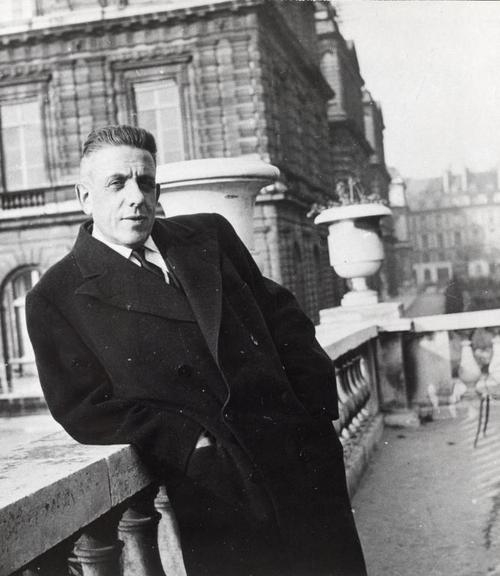
Karita Mattila's Saturday night recital offered an evocative selection of sensual art songs from the late nineteenth and early twentieth centuries (full listing here.) Partnered with Martin Katz, Mattila spun hypnotic melodies of fin-de-siècle seduction. I was bewildered, however, both by the number of empty seats and by the behavior of those who were there. In the first half of the program, applause from all levels came after each song, persistent, but sounding almost perfunctory. There was welcome silence during the Sallinen set, and then applause after two of five songs by Joseph Marx. I wanted to tell the applauders to take a glass of absinthe and relax, and let Mattila and Katz work their magic uninterrupted.
The first half of the recital was devoted to cycles by Poulenc and Debussy, both structured around the texts of a single poet to whose work the composer was specially drawn. Poulenc's Banalités, with texts by Apollinaire, comprised a series of vignettes united by wry wit rather than mood, from the lightly satirical "Chanson d'Orkenise," to the sensually languorous "Hôtel," through the poems to place that are "Fagnes de Wallonie" and "Voyage à Paris." The last song in Poulenc's cycle, "Sanglots," moves the furthest from realism, taking the listener through a series of romantically morbid images. The virtues of Katz' sensitive accompaniment were on full display here, as he let single notes and richly rolling chords convey equal intimacy of despair. Debussy's Cinq poèmes de Baudelaire, setting poems from Les Fleurs du Mal, continued our odyssey into impressionistic treatments of romantic love. Although Mattila's voice sounded somewhat exposed and fragile at the top, she sang with beautiful coloration of tone throughout, and admirable attention to text. (I was glad of having the texts open on my lap, for I didn't catch every syllable, but she treated the many examples of wordplay or extended metaphor with intelligence.) Here, too, Katz was her worthy partner in drawing out the expressive richness of Debussy's harmonies.
 |
| Poulenc, date unknown |
Tuesday, November 29, 2011
Die alten, bösen Lieder: Ian Bostridge at Carnegie Hall
 |
| Bostridge; photo (c) Simon Fowler |
Wednesday, September 7, 2011
Damrau, Thielemann, Strauss: Poesie
My expectations of Diana Damrau's most recent recital disc were stratospherically high. Damrau is a singer whose technique and musical intelligence I admire, and here she is partnered by none other than Strauss-specialist Christian Thielemann leading the Münchner Philharmoniker. At first listen, I was a little disappointed; the rich detail and intense passion of Strauss's lieder did not come through with the clarity I expected. Perhaps it would be more accurate to say "in the manner I expected," since more, and more attentive listening led to a revision of this judgment. Not all of the songs come through with equal individuality, in my opinion, but Damrau's security of phrasing and excellent diction keep them on a firm footing throughout. With Thielemann and the orchestra I cannot find fault; dynamics and tempi were handled with nuance and insight. Indeed, Damrau and the other musicians seem on this disc to do the reverse of tearing a passion to tatters: subtlety and restraint allow the rich intensity of Strauss's "miniatures," as Damrau calls them, to shine, perhaps differently than the listener expects them to.
Wednesday, March 16, 2011
Adoring the Anti-Diva: Christa Ludwig

 . I will always imagine "Habet Acht!" in her voice. The fact that Ludwig's Brangäne is so emotionally as well as vocally rich contributes no small part to the recording's success, for me. (She recorded the role again under Karajan.) So much for the grounds of initial respect. But it was her Leonore which made me fall in love.
Sunday, March 7, 2010
Mein Ruh' ist hin
The middle of the academic term is a time of reckoning: a time of completing some projects; a time of realizing that it really is time to start serious work on others; a time of staying in and reading/writing instead of jaunting down to the Met. Fortunately, this can also be a time of listening to recital CDs to soothe and stimulate. Firstly, there's the panache of Vesselina Kasarova's Rossini arias and duets , filled with vocal fireworks for every emotional occasion. (Thanks are due to Se Vuoi Pace, whose own healthy obsession with Kasarova cannot but whet interest in the reader-listener.) Secondly, there is the Lieder recital of Waltraud Meier
 featuring Brahms, Schumann, and Schubert. Waltraud Meier is not only (in my opinion) an extraordinary musician; she also strikes me as being one of those rare human beings who seems as though they would have been at home--and in command--in whatever century and situation fate chose to put them. I suspect she could have made a success of behind-the-scenes political agency in the seventeenth century, among other things. And I am wowed by the album art for this record, where she channels 1930s screen goddess glamor in black lace and flawless lipstick:

Alas, I will never be that fabulous. But revenons à nos moutons: the Brahms Ziegeunerlieder are fiery and seductive. "Frauenliebe und -leben" is deliciously expressive, full of personality which I often struggle to find there. And with the Schubert, transcendence is reached. Maybe it's partially my own temperament which predisposes me to find resonance here; but I have listened to these untiringly. And I learn, in the bland language of Amazon, that the item has been discontinued by the manufacturer! Mein Herz ist schwer. Ah well... for this, as for so much else, I will rely on the NYPL... and trust that "Gretchen am Spinnrad"--and "Die Junge Nonne," and "Der Tod und das Mädchen"!--are not actually essential to the process of research... even if it feels like it.
, filled with vocal fireworks for every emotional occasion. (Thanks are due to Se Vuoi Pace, whose own healthy obsession with Kasarova cannot but whet interest in the reader-listener.) Secondly, there is the Lieder recital of Waltraud Meier featuring Brahms, Schumann, and Schubert. Waltraud Meier is not only (in my opinion) an extraordinary musician; she also strikes me as being one of those rare human beings who seems as though they would have been at home--and in command--in whatever century and situation fate chose to put them. I suspect she could have made a success of behind-the-scenes political agency in the seventeenth century, among other things. And I am wowed by the album art for this record, where she channels 1930s screen goddess glamor in black lace and flawless lipstick:
Alas, I will never be that fabulous. But revenons à nos moutons: the Brahms Ziegeunerlieder are fiery and seductive. "Frauenliebe und -leben" is deliciously expressive, full of personality which I often struggle to find there. And with the Schubert, transcendence is reached. Maybe it's partially my own temperament which predisposes me to find resonance here; but I have listened to these untiringly. And I learn, in the bland language of Amazon, that the item has been discontinued by the manufacturer! Mein Herz ist schwer. Ah well... for this, as for so much else, I will rely on the NYPL... and trust that "Gretchen am Spinnrad"--and "Die Junge Nonne," and "Der Tod und das Mädchen"!--are not actually essential to the process of research... even if it feels like it.
Subscribe to:
Posts (Atom)
LinkWithin
