
Showing posts with label Britten. Show all posts
Showing posts with label Britten. Show all posts
Wednesday, September 25, 2013
Joy of Creation: Sir John Tomlinson sings Michelangelo in Frankfurt


Saturday, July 20, 2013
Owen Wingrave: You forget, you are the enemy too
 |
| Finley and Savidge: debating duty |
The Arthaus DVD released earlier this year is of a 2001 for-television production: strangely, it seemed not quite formatted for square home screens. (More background on the 1971 work may be found here; original broadcast here.) Over forty years after the work's premiere, the idea of writing an opera for television still seems rather like a media experiment which might be productively repeated. The disc is mostly frill-less (and though there were credits for titles designers, I couldn't see that subtitling was an option) but it does include an hour-long documentary. I know comparatively little about Britten's biography, so enjoyed it thoroughly and without the ability to assess what elisions or overbold interpretative strokes may have undermined its accuracy or orthodoxy. Perhaps it was the fault of the screen I watched it on that no names for the interviewees appeared. It incorporates delightful footage, from rehearsals (numerous) to home footage of recorder-playing and playing with dogs in the backyard. It makes no mention of Owen Wingrave itself, however, despite the fact that the opera, to a libretto by Myfanwy Piper, focuses the narrative on the problem of the individual against and within society (unsurprising to those who know, or even know of Peter Grimes.)
Wednesday, February 27, 2013
Turn of the Screw: What goes on in your dreams?
 |
| Divided loyalties: Miles, the Governess, and Peter Quint in NYCO's Turn of the Screw (Photo (c) Richard Termine) |
If the production had had less happening, I thought, it would have been easier to focus on the essentials of what it was about. Intelligent and nuanced in detail (how does the Iron Lady on the BBC affect this anxious socialization of appropriate femininity and masculinity?) it contained some ghostly gimmicks which I found distracting. If Peter Quint represents repressed (bisexual?) desire, there's no need for his presence to make the lights flicker and the TV go dark. Aside from these tropes of supernatural haunting, there's nothing to suggest that Quint is a tortured soul; rather, he seems the most self-assured character of the piece. Though Quint himself is not troubled, the Governess is, deeply. Miss Jessel was. Miles, by contrast, though disturbed and frightened by Quint, is also his ally, also the singer of his song. This unsettled, unsettling openness contrasts with the insistence of the others that Quint's ways are other and incomprehensible. In Miss Jessel's address to Flora, in Mrs. Grose's outcry, there are repeated assertions that men and women cannot, must not, should not communicate in the same ways. And this is part of what thwarts the Governess: Miles is (almost) a man; he can often seem it in his preternatural self-possession and suave, even challenging maturity. So how must she treat him? As a child? Or as the always-already sexualized, dangerous Other, the male? Miles' hesitant attempts--sometimes fearful, sometimes precociously confident--to reconcile this perceived dichotomy end in frustration, and the tragedy of a forfeited future.
Saturday, May 5, 2012
Billy Budd: Farewell, old Rights o' Man
 |
| Photo (c) Ken Howard/Metropolitan Opera |
 aesthetic, but is efficient and structurally clever. The set used space well, underlining the reality that the many-leveled ship is a confined, complex, and dangerously authoritarian society. The claims that fate (or institutions) can absolve individuals from responsibility, and that divine justice renders human injustice less rather than more culpable, were consistently undermined. This may be more due to the performers than the production. There was good energy on stage and in the pit, keeping the emotional tension as well as the ideological stakes of the performance high.
David Robertson led the orchestra in a performance both powerful and powerfully eerie. I thought the delicate moments of the score well-handled, with nicely judged details, especially from the woodwinds. Robertson was attentive to the singers, (and could often be seen mouthing the text of the libretto along with them.) The overall tone was meditative rather than urgent, but I thought it worked. The men of the Met chorus outdid themselves in excellence; the interval audience was abuzz with comments on their superlative performance. From the first, uncanny "Heave away, heave" to the final, inarticulate murmur of outrage, the chorus sang with excellent diction and powerful expression. Theirs was perhaps the standout performance of the evening. This was my first live Billy Budd, so perhaps those more familiar with the opera would say that it is inevitable for the chorus to emerge vividly as a collective protagonist, oppressed by the same systems which enable Billy's unjust execution... in any case, this struck me more powerfully than it ever had in listening to recordings.
Tuesday, October 25, 2011
Poetry in the Pity: Britten's War Requiem with the LSO

Sunday, November 14, 2010
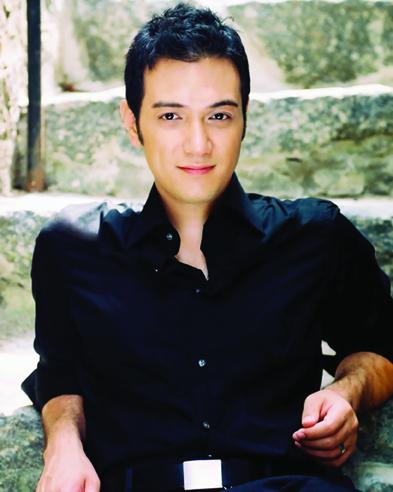
Sing on: Nicholas Phan at Carnegie Hall
Saturday, September 11, 2010
Music for a While
Gentle readers, a narrative of serendipity: on Tuesday, while browsing Kinderkuchen for the FBI (a blog worth investigating not only for its magnificent name, but also for its eclectic content) I chanced across a notice in the blogroll: Jesse Blumberg performs in NYC. I followed, of course, this scent, and Barihunks (!) informed me that the program would be one of British song. It remained but to inform my visiting friend, a singer, who exclaimed that this was among her favorite repertory... and we were off to the piano dealership (where we coveted things!) where the recital was to be held.
The personable Mr. Blumberg informed his audience that this was the first time, and hopefully the first of many, that he and pianist Erika Switzer would be performing the recital, and our indulgence for occasional referrals to a music stand was therefore begged. The program was organized into three sets--a Shakespeare set, a "Young Love" set, and a "Day and Night" set--with Britten arrangements as "palate cleansers" between them. While I was familiar with most of the texts, much of the music was relatively unfamiliar to me, and some pieces entirely unknown. Mr. Blumberg stated at the outset that the pieces were infrequently heard (especially together,) because of a contemporary sensibility which shies away from their lush romanticism, a romanticism which should require no apology. I felt that, did I own a lace-edged handkerchief, it would have been suitable to wave it in a gesture of support for Unapologetic Romanticism.
The personable Mr. Blumberg informed his audience that this was the first time, and hopefully the first of many, that he and pianist Erika Switzer would be performing the recital, and our indulgence for occasional referrals to a music stand was therefore begged. The program was organized into three sets--a Shakespeare set, a "Young Love" set, and a "Day and Night" set--with Britten arrangements as "palate cleansers" between them. While I was familiar with most of the texts, much of the music was relatively unfamiliar to me, and some pieces entirely unknown. Mr. Blumberg stated at the outset that the pieces were infrequently heard (especially together,) because of a contemporary sensibility which shies away from their lush romanticism, a romanticism which should require no apology. I felt that, did I own a lace-edged handkerchief, it would have been suitable to wave it in a gesture of support for Unapologetic Romanticism.
Subscribe to:
Posts (Atom)
LinkWithin
