 |
| Church of the Gesù, Milwaukee |
Showing posts with label J.S. Bach. Show all posts
Showing posts with label J.S. Bach. Show all posts
Sunday, November 15, 2015
Sunday Special: Divine Redeemer


Sunday, October 26, 2014
Ich habe genug: Bach and Brahms with the BSO

Friday, March 15, 2013
Bach's Mass in B Minor with the NYPhil
I have to accept the way [Bach] believed. His music never stops praying.... I do not believe in the Gospels in a literal fashion, but a Bach fugue has the Crucifixion in it—as the nails are being driven in. --György Kurtág
This week, the New York Philharmonic's ongoing Bach Variations festival brings a deeply impressive slate of soloists to join the orchestra and the New York Choral Artists as Alan Gilbert leads his first performances of the B Minor Mass; I attended the first of these on Wednesday. For me, this was the first live performance of a piece I've listened to countless time since it taught me, when I was seven, that grown-ups could cry, and it's music I love deeply. It's music that's prayed with me and that has prayed for me when I could not. Under Gilbert's baton, the order and beauty of the baroque were celebrated in all their magnificence. Collectively and severally, the members of the orchestra delivered passionate and polished performances. And the evening led me to ponder: when it comes to Bach--especially when it comes to this Bach--can one achieve excellence without confronting eternity?
Wednesday, August 22, 2012
From Bach to broken branches at Mostly Mozart
I loved the performance at the Mostly Mozart Festival I attended last night, not just because it allowed me to bask in a perfect late summer evening and pretend that the academic year was still only a distant shimmer on the horizon. The pieces given were loosely linked by the influence of J.S. Bach on his successors (so the program note); what composer, I might ask rhetorically, has not been influenced by Bach? This could perhaps include the evening's soloist, Stephen Hough, who gave the New York premiere of his own 2010 sonata, "broken branches," in what the program called a pre-concert recital. (I have conflicting feelings about the format of this. I hope it might tempt in some audience members wary of new music, but it also seems to savor faintly of making such works wait around in an antechamber before being formally received into the canon, and the status of main event. Your thoughts on this, Gentle Readers, are welcomed.) The sonata itself I found emotionally involving and evocative. Consisting of linked sections within a single movement, it alludes to Janacek's "On an Overgrown Path" and to John 15. It is hardly too much to say that any composer's note referencing a sixth-century Latin hymn is guaranteed my intellectual enthusiasm. Melodic themes were rearranged, fragmented, questioning each other, eventually emerging through tempests of glissandi to a quieter inquiry that floated off the upper end of the keyboard into silence. Striking throughout was not only the precision of Hough's playing but the variety of colors he drew from the keys. It's quite the week of faith and doubt in music for me!
The evening continued with Bach--foremost composer, perhaps, of faith and doubt--in the form of Mendelssohn's arrangement of JSB's Orchestral Suite No. 3 in D major. Andrew Manze led the Mostly Mozart Festival Orchestra in a performance of considerable beauty, if not brought as close to the bone as Bach can be. I especially appreciated the liveliness with which the dance movements were shaped, giving their dignified progression an appropriately festive feel. The famous air in the second movement was played with affectionate engagement by concertmaster Ruggero Allifranchini.
Following this, Mendelssohn's piano concerto no. 1 was given with surprising and welcome impulsion from the orchestra and Mr. Hough. No too-restrained mannerism here: swift tempi and dynamic give-and-take made this a performance that felt unusually lively and spontaneous. I was, again, struck by the precision of Hough's playing, and his gift of emphasizing the turn (or return) of a musical phrase with a slight shift in volume or tone. Generously, he gave the enthusiastically applauding audience an encore, making Liszt's Träumerei simultaneously more delicate and more profound than I had imagined it as.
By this point, my companion and I were thoroughly pleased... and we hadn't even gotten to the Mozart! The Jupiter symphony was given with verve that did nothing to undermine its nobility. The strings were notable for their use of dynamic nuance, and the cohesiveness and energy of the ensemble were both admirable. The playful woodwind solos, too, were delightful. This performance was Manze's Mostly Mozart debut, but he seemed to have a fine rapport with the orchestra. With the exception of a few cell phone offenders and early leavers (who are these people?) the audience seemed to be engaged as well, hardly sounding consumptive at all, and heartily applauding at the evening's close.
Sneaky photos of post-Mendelssohn bows. Note how happy everyone looks!


The evening continued with Bach--foremost composer, perhaps, of faith and doubt--in the form of Mendelssohn's arrangement of JSB's Orchestral Suite No. 3 in D major. Andrew Manze led the Mostly Mozart Festival Orchestra in a performance of considerable beauty, if not brought as close to the bone as Bach can be. I especially appreciated the liveliness with which the dance movements were shaped, giving their dignified progression an appropriately festive feel. The famous air in the second movement was played with affectionate engagement by concertmaster Ruggero Allifranchini.
Following this, Mendelssohn's piano concerto no. 1 was given with surprising and welcome impulsion from the orchestra and Mr. Hough. No too-restrained mannerism here: swift tempi and dynamic give-and-take made this a performance that felt unusually lively and spontaneous. I was, again, struck by the precision of Hough's playing, and his gift of emphasizing the turn (or return) of a musical phrase with a slight shift in volume or tone. Generously, he gave the enthusiastically applauding audience an encore, making Liszt's Träumerei simultaneously more delicate and more profound than I had imagined it as.
By this point, my companion and I were thoroughly pleased... and we hadn't even gotten to the Mozart! The Jupiter symphony was given with verve that did nothing to undermine its nobility. The strings were notable for their use of dynamic nuance, and the cohesiveness and energy of the ensemble were both admirable. The playful woodwind solos, too, were delightful. This performance was Manze's Mostly Mozart debut, but he seemed to have a fine rapport with the orchestra. With the exception of a few cell phone offenders and early leavers (who are these people?) the audience seemed to be engaged as well, hardly sounding consumptive at all, and heartily applauding at the evening's close.
Sneaky photos of post-Mendelssohn bows. Note how happy everyone looks!


Monday, March 26, 2012
Ich folge dir gleichfalls: Johannespassion at Carnegie Hall
I find Bach's Johannespassion irresistible under all circumstances; as well performed as it was by Les Violons du Roy, La Chapelle de Quebec, and an extraordinary group of soloists, I found it transporting. Bernard Labadie led the combined forces with energized precision, drawing out performances which were both subtle and--giving the word its full weight--passionate. Having a chamber orchestra allowed the textures of Bach's writing to emerge with exquisite clarity. Tempi were relatively fleet, but not to the detriment of emotional intensity and nuance. This comes close to gushing, I realize, Gentle Readers... but it's Bach, and it was brilliantly done. I was astonished that (especially on a raw and rainy Sunday afternoon in Lent) it wasn't better sold, but many of those who were there were standing during the final applause. Here Bernard Labadie talks about the rhetoric of Bach's "musical sermons":
Sunday, December 4, 2011
Sunday Special: Nun komm, der Heiden Heiland
This Sunday Special, Gentle Readers, is brought to you thanks to my Aunt Dorothy, through whom I have discovered a Berlin-based vocal ensemble reinventing Christmas carols. But before I get to the Berliner Solistenchor, there is Bach. Don't tell the liturgical police, but I'm a week late, as this cantata was written for the first Sunday in Advent, to celebrate the beginning of the new church year. Still, I am a believer in Bach at all times:
Isn't it lovely? The useful Bach Cantatas website has extensive information on it here. In considerably simplified form, it survives in many Protestant hymnals, making it a candidate for the creative talents of the Berliner Solistenchor.
Isn't it lovely? The useful Bach Cantatas website has extensive information on it here. In considerably simplified form, it survives in many Protestant hymnals, making it a candidate for the creative talents of the Berliner Solistenchor.
Friday, April 22, 2011
Jesu, meine Freude
I decided that, on Good Friday, Die Walküre would come under the heading of "all the vain things that charm me most." So I went to church. The paradoxes and mysteries of this liturgical season have had a great deal of music dedicated to them, and so I also went down to Immanuel Lutheran for a concert featuring J.S. Bach and Buxtehude. (One of the most valuable things I learned living in Germany was vigilance in looking out for free and cheap concerts of Bach and/or Buxtehude.) In addition to the church's choir, this evening of Good Friday music featured the contributions of early music group ARTEK, whose midday, midweek, midtown concerts I have often enjoyed. And I had a beautiful evening. ARTEK were impressive as ever, and the choir sang with passion and sensitivity to the music.
For me, lover of both German baroque music, and the wonderful old German that goes with it, the selections were a treat. After "Halt, was du hast" by Johann Michael Bach came Buxtehude's "Jesu, meine Freude." My favorite movement of this is without a doubt the bass solo "Trotz dem alten Drachen." Obviously this is a great deal of fun to say, but it is also an inspiring text in a vigorous setting, here sung by Eric Edlund. ARTEK had a moment to shine with Johann Rosenmüller's "O Jesu süß." Buxtehude's beautiful "O clemens, o mitis" was given with a lovely interiority by Tiffany Rosenquist and members of ARTEK. The J.S. Bach "Jesu, meine Freude" (BWV 227, text here) was given last, wisely. See you on the other side of Easter, Gentle Readers.
For me, lover of both German baroque music, and the wonderful old German that goes with it, the selections were a treat. After "Halt, was du hast" by Johann Michael Bach came Buxtehude's "Jesu, meine Freude." My favorite movement of this is without a doubt the bass solo "Trotz dem alten Drachen." Obviously this is a great deal of fun to say, but it is also an inspiring text in a vigorous setting, here sung by Eric Edlund. ARTEK had a moment to shine with Johann Rosenmüller's "O Jesu süß." Buxtehude's beautiful "O clemens, o mitis" was given with a lovely interiority by Tiffany Rosenquist and members of ARTEK. The J.S. Bach "Jesu, meine Freude" (BWV 227, text here) was given last, wisely. See you on the other side of Easter, Gentle Readers.
Wednesday, October 20, 2010
Kommt, ihr angefochtnen Sünder
My plans for the next few days are as follows: reading a monograph on the development of Europe in the Middle Ages (yes, all of it.) Then another one about marriage and canon law. Then writing a lecture. Then guiding a museum tour. Then giving a lecture. Then attending a seminar. I do not know when I will next go to the opera. This is rather sad. But here is some nice Bach:
Is anyone interested in forming a committee against dubious wardrobe choices? I know Definitely the Opera has addressed this important issue. And Magdalena Kozena's dress is a lovely color and appears to be a nice cut... but all I can think of looking at those sleeves is Anne of Green Gables.
Is anyone interested in forming a committee against dubious wardrobe choices? I know Definitely the Opera has addressed this important issue. And Magdalena Kozena's dress is a lovely color and appears to be a nice cut... but all I can think of looking at those sleeves is Anne of Green Gables.
Sunday, April 4, 2010
et resurrexit
I love Bach. But then I've said that before. I love the humanity of this, a boundlessly joyous celebration of the end of fear. A lot of this week has been spent thinking about the fear, violence, and hatred in the world... and it's painful to contemplate. But then there's Bach. Easter resolution: to work for joy, hope, and love. Joy, hope, and love, people!
Thursday, April 1, 2010
Domine, ne in furore
For me, this is a week of much church, and also, therefore, a week of much music. Bach has been predictably checked out of the library, as has Brahms. The magic of music blogs has also been forthcoming, with an extraordinary recording of "Herr, unser Herrscher" shared at Dich, Teure Halle; the video has Renaissance art galore, for extra terror and beauty. And the recording from which it is taken is astonishingly cheap! Oh, the temptation of impulsive classical music purchases! (Parenthetical anecdote: in a far-too-good-for-me experience, I first heard the Johannespassion in a concert given at the beginning of Lent in the Elisabethkirche of Marburg. I was smitten.) Back to this year's Lent, though... I have even already taken a sneak peek at Easter with "I know that my Redeemer liveth" shared at Se Vuoi Pace. But before we get there really, there is a lot more music to be appreciated.
Wednesday, February 17, 2010
Ich habe genug
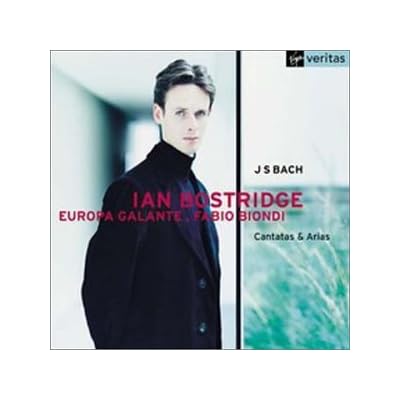
It's a bit of a tangent from opera, but J.S. Bach, I believe, should always be shared. In an effort to surround myself with music appropriate to Ash Wednesday, I checked out from the local library this CD
 of Bach cantatas and arias by Ian Bostridge, a singer who had been on my "to investigate" list for a long time. (I'm only a few years behind music reviewers everywhere in my "discoveries," it would seem...) I'm glad I did. Bostridge has a lovely, clear sound, and exquisite diction. I thought he did a nice job with the emotional range of the pieces, too. Here you can listen to him singing BWV 82a, "Ich habe genug," which has long been a special favorite of mine.
Subscribe to:
Posts (Atom)
LinkWithin
