 |
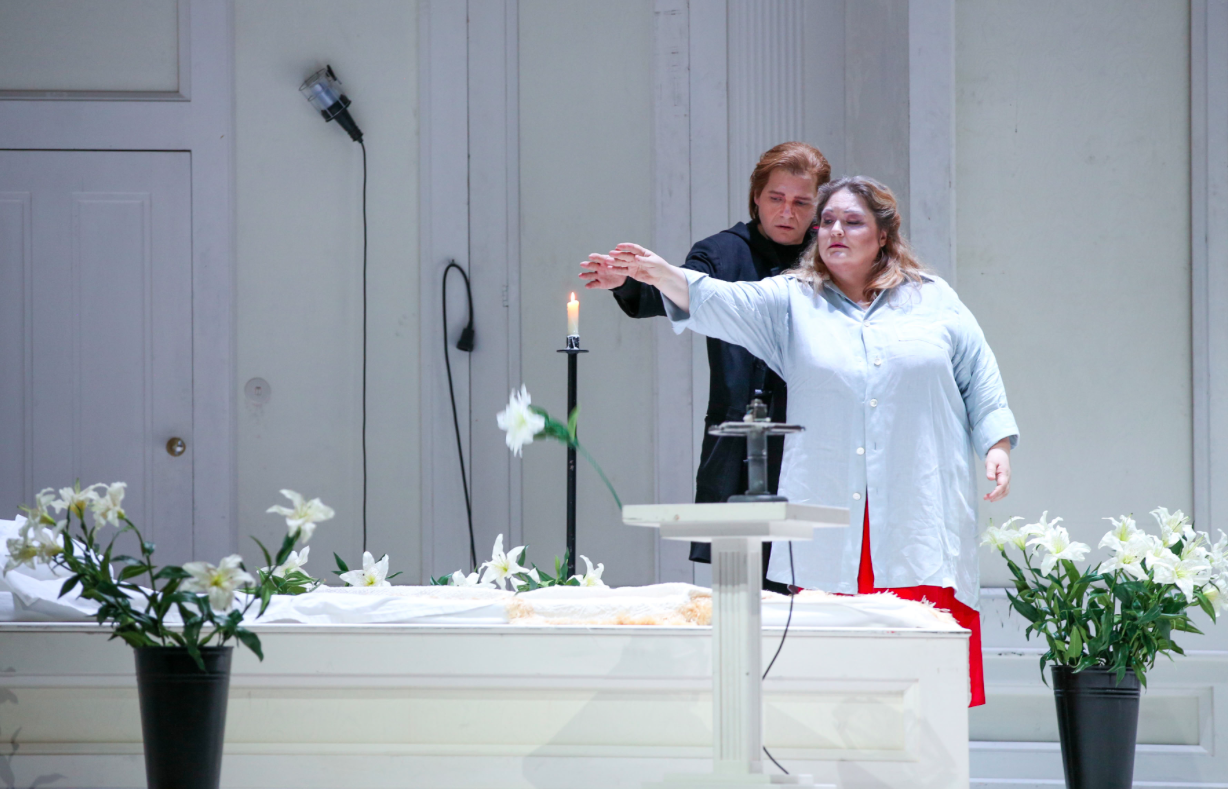
| Liebesnacht: Ryan/Wilson in Act II Photo © Oper Frankfurt/Wolfgang Runkel |
Showing posts with label Lance Ryan. Show all posts
Showing posts with label Lance Ryan. Show all posts
Saturday, May 3, 2014
Trug des Herzens, Traum der Ahnung: Tristan und Isolde in Frankfurt


Friday, October 25, 2013
Tannhäuser: dem unsren sei dein Lied nicht fern
 |
| Desire and the dangers of female archetypes: Tannhäuser Act III. Photo (c) Oper Frankfurt |
I only made it into Thursday's performance of Tannhäuser by the skin of my teeth, nabbing the last rush ticket about four minutes before curtain. Frankfurt's house was packed, eager, and informed, respectfully silent during the performance, and busily chatting about this and other Tannhäusers during the intervals. The adrenaline rush of ticket-getting may have contributed to my sensitivity, but I found the treatment of the score by the orchestra under Constantin Trinks never less than exciting and compelling. Although I did not find all aspects of Vera Nemirova’s production equally convincing, it was both intellectually sophisticated and viscerally moving. Its greatest achievement was in handling Wagner’s presentation of dichotomous feminine ideals, exposing the perniciousness and inevitable violence of such attitudes. This was achieved by teasing out many of the other ideas in the score (Dresden version) and libretto. I appreciated that religious faith was not treated as intrinsically foolish or deluded, as I appreciated Nemirova’s refusal to treat the sentimental piety of the text as though it were both profound and axiomatic. Instead of a fictionalized thirteenth century, Nemirova creates a fictionalized 1960s for the drama of desire, conviction, and community.
Subscribe to:
Posts (Atom)
LinkWithin
