Showing posts with label Karita Mattila. Show all posts
Showing posts with label Karita Mattila. Show all posts
Wednesday, May 9, 2012
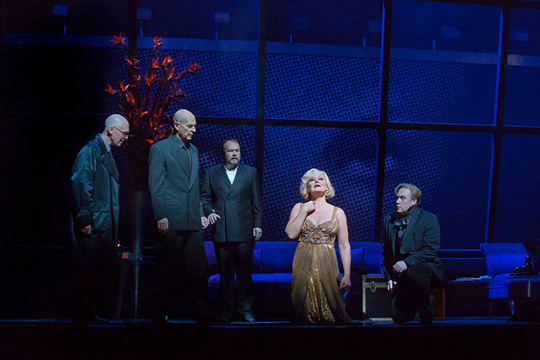
Věc Makropulos


Monday, December 12, 2011
Harmonie du soir: Karita Mattila at Carnegie Hall
Karita Mattila's Saturday night recital offered an evocative selection of sensual art songs from the late nineteenth and early twentieth centuries (full listing here.) Partnered with Martin Katz, Mattila spun hypnotic melodies of fin-de-siècle seduction. I was bewildered, however, both by the number of empty seats and by the behavior of those who were there. In the first half of the program, applause from all levels came after each song, persistent, but sounding almost perfunctory. There was welcome silence during the Sallinen set, and then applause after two of five songs by Joseph Marx. I wanted to tell the applauders to take a glass of absinthe and relax, and let Mattila and Katz work their magic uninterrupted.
The first half of the recital was devoted to cycles by Poulenc and Debussy, both structured around the texts of a single poet to whose work the composer was specially drawn. Poulenc's Banalités, with texts by Apollinaire, comprised a series of vignettes united by wry wit rather than mood, from the lightly satirical "Chanson d'Orkenise," to the sensually languorous "Hôtel," through the poems to place that are "Fagnes de Wallonie" and "Voyage à Paris." The last song in Poulenc's cycle, "Sanglots," moves the furthest from realism, taking the listener through a series of romantically morbid images. The virtues of Katz' sensitive accompaniment were on full display here, as he let single notes and richly rolling chords convey equal intimacy of despair. Debussy's Cinq poèmes de Baudelaire, setting poems from Les Fleurs du Mal, continued our odyssey into impressionistic treatments of romantic love. Although Mattila's voice sounded somewhat exposed and fragile at the top, she sang with beautiful coloration of tone throughout, and admirable attention to text. (I was glad of having the texts open on my lap, for I didn't catch every syllable, but she treated the many examples of wordplay or extended metaphor with intelligence.) Here, too, Katz was her worthy partner in drawing out the expressive richness of Debussy's harmonies.
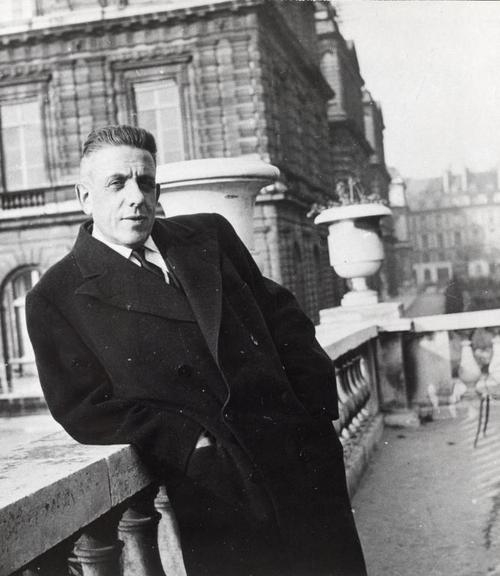 |
| Poulenc, date unknown |
Saturday, March 12, 2011
Queen of Spades: Three, Seven, ACE
I have a new object of hero-worship and his name is Andris Nelsons. I spent much of Friday night on the edge of my seat (which, unbelievably, was in the orchestra section and obtained at student price 15 minutes before curtain.) The Met's Queen of Spades, in a suitably moody production, romantic and stark by turns, and always stylish, is cast this season without a weak link; each of the principals brought impressive vocal artistry and theatrical intensity to their respective roles. Pictures from previous runs of Elijah Moshinsky's 1995 production may be found here and here; update: pictures from this run here. I feel I'd be better able to evaluate it if I were more familiar with the score, or other productions, but it served well to highlight the contrasts between the "normal" world of St. Petersburg and the fateful trajectory of the obsessed Hermann. I'm not quite sure I understood the device of the picture frame, although it did serve as a dramatic demarcation between Hermann and society in the scene at the ball and elsewhere. The restricted color scheme also helped keep even the grandest scenes from the merely spectacular (a scenery-applauder was shushed, and my soul rejoiced, but unfortunately they found strength in numbers on two occasions. Premature applauders were also shushed, twice! Overheard conversations confirmed the impression that although there were empty seats, those who were there were enthusiasts.) For a quick synopsis of the opera go here.
Sunday, January 30, 2011
Northernness: Karita Mattila and the NYPhil with Beethoven, Sibelius, and Nielsen

Subscribe to:
Posts (Atom)
LinkWithin
