 |
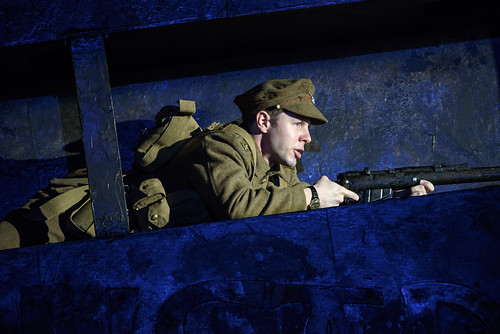
| Andrew Bidlack as Private John Ball, on sentry duty Photo (c) Bill Cooper/WNO |
Saturday, July 2, 2016
In Parenthesis: Remembering WWI at the Royal Opera House


Friday, June 17, 2016
Opera in Prose (and Il Trovatore)
The progress of my summer reading list has been somewhat slowed by academic responsibility (alas) but I am currently immersed in Alexander Chee's recent The Queen of the Night, and it is so glorious that I can't wait for the eventual review to share it with you all. I got it from my local library, but it's the kind of book I'd love to own, the better to forcibly loan it to people, to say nothing of revisiting particularly lush passages of its gorgeous prose. It works (so far!) brilliantly well as a historical novel of the mid-nineteenth century, and is also a fascinating look at one woman's self-discovery... and discovery of opera. The evocation of opera in prose is, of course, a tricky thing. But it's also proved irresistibly tempting to many authors.... and bloggers. I was first drawn into the sphere of opera blogging because prose records of unique opera evenings were (and are) so much more numerous, and more accessible, than audio or visual records of them.
The dramatic use of opera in novels dates back at least to the Romantics, with Flaubert's Madame Bovary a justly famous example, and Dumas père's Le Comte de Monte-Cristo a less famous but equally fascinating one. (If you have favorite examples of opera evoked in prose, please share them!) I've been particularly intrigued by Chee's treatment of Il Trovatore, an opera he describes as "a tragedian's sleight-of-hand." The poignant ballad "Deserto sulla terra" he describes as perhaps the most beautiful song ever written for a man... which of course led me into a process of re-exploring the opera and this aria.
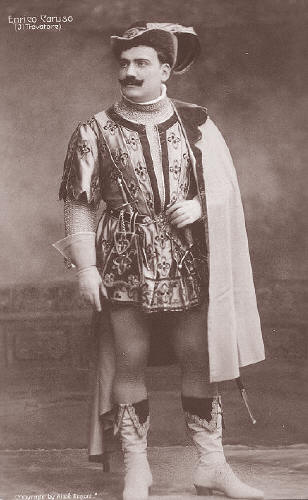 |
| Caruso as Manrico |
Tuesday, May 31, 2016
Reading List: The Real Traviata
René Weis' new monograph on Marie Duplessis makes big claims even before getting past the title page. Marie Duplessis, the charismatic and consumptive courtesan of nineteenth-century Paris, has long fascinated readers of Dumas' novel and lovers of Verdi's opera... to say nothing of Garbo devotees. I'm not exempt from the fascination, and have been disappointed by the comparative dearth of scholarly attention paid to her. I was eager to see what Weis would make of her history and her legend.
As should surprise no one, I'm always interested in recovering women's histories from their romanticized legends. Moreover, there are so many layers to the ways in which the character of Marguerite was created and recreated, that -- possibly with professional bias -- I felt eager to read an academic approach to excavating Duplessis' history. The possessions of Marguerite, auctioned in the opening of Dumas' novel, and that of Zeffirelli's Traviata film, are famously based on those of Duplessis. The edition of La Dame aux Camélias I read included a rather sentimental preface, retailing the nineteenth century's fascination with its own romanticized version of Marguerite/Marie's history. Personally, I think Dumas fils and Verdi are both much less sentimental than their reception gives them credit for. On the whole, Weis' work bears testimony to remarkably resourceful research in attempting to create an accurate portrait of Marie, using her own correspondence, the testimonies of contemporaries, and a wealth of detail about the world in which she lived: riding horses, furnishing apartments, and, not least, consuming culture, as a regular attendee of the opera and theatre, and an avid reader. I was fascinated by this vision of an intelligent woman, both sincerely enjoying a variety of pursuits, and crafting, as a demimondaine, an elaborate public persona. The Real Traviata is an impressively researched work; Weis mined multiple archives for diverse sources, and uses Duplessis' laundry lists, library inventories, and shopping receipts take their place alongside her extensive correspondence, and the posthumous narrative sources which are at once challenging and indispensable. The book is available here, for 30% off the list price with this code: AAFLYG6
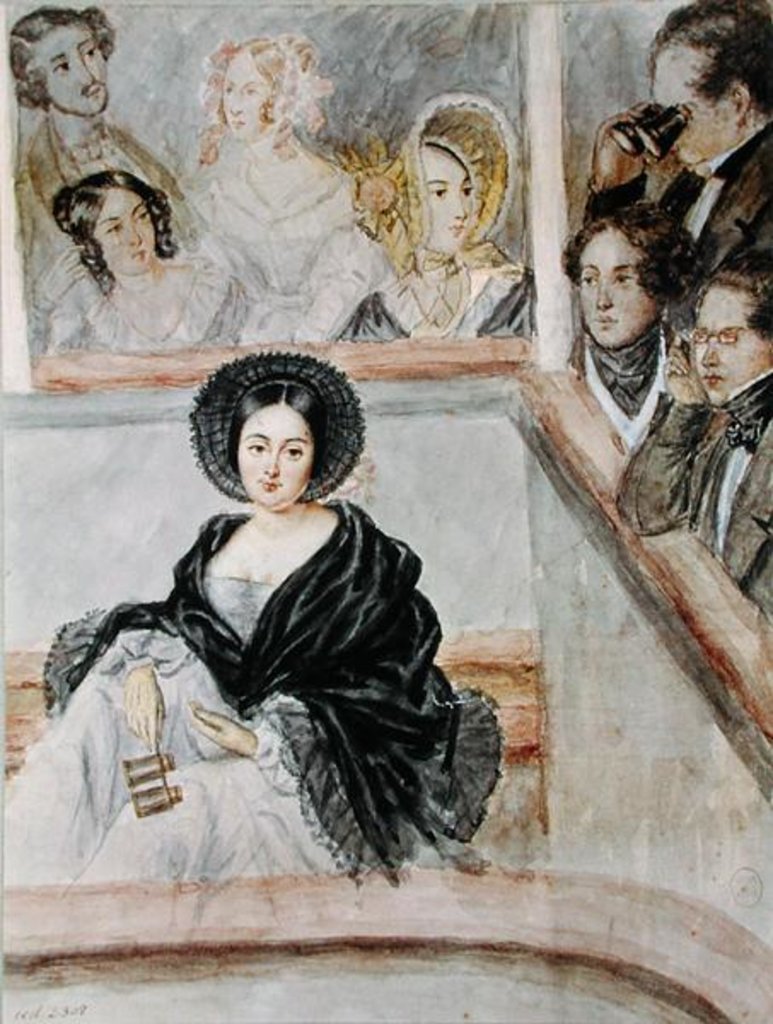 |
| Marie Duplessis at the theatre |
Wednesday, May 4, 2016
Ein köstlicher Abend: Der König Kandaules in Ghent
 |
| Ghent's opera house |
Wednesday, April 6, 2016
Sander & Sander: Die Schöne Müllerin
 |
| Die böse/liebe Farbe |
And yet. And yet, I found myself disappointed, missing a sense of the cycle's arc. There was polish and precision; but there was surprisingly little variation of tempo or dynamics. From the piano, there was often a strangely forceful attack at the beginning of songs, which, in my view, contributed neither to musical flow or dramatic tension. The whole frequently felt sluggish, which was particularly odd in this cycle where the impetuous protagonist is either brooding or striding about, but never, surely, plodding. In the trailer for the album, K. Sander speaks with warmth (in German) about the rich emotional variety of the cycle, but that understanding was rarely communicated to the listener.
Saturday, March 19, 2016
Crossing Over: Sacred Music for the Agnostic
 |
| Light and darkness (Edinburgh sunset, photo by me) |
Friday, March 4, 2016
Il tempo vola... baciami! Manon Lescaut at the Met
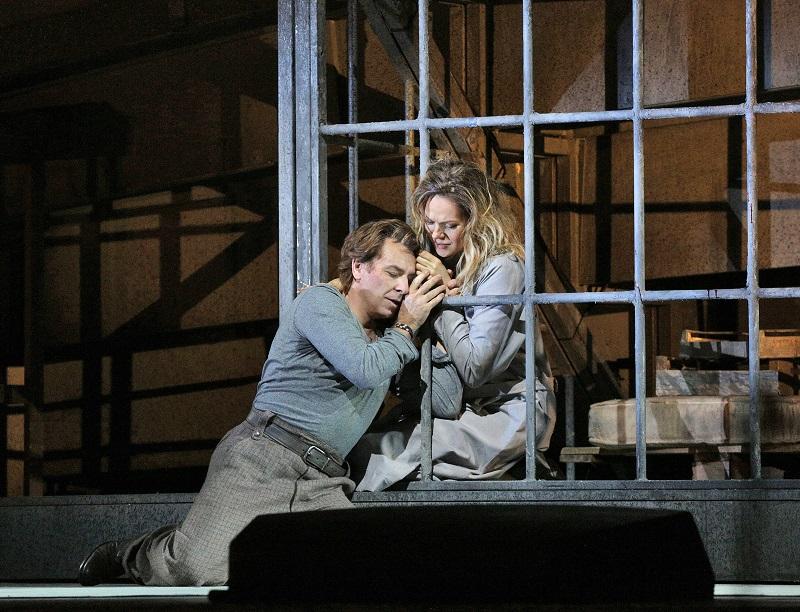 |
| Thwarted lovers: Alagna and Opolais in Act III (Photo (c) Ken Howard/Met Opera) |
Subscribe to:
Posts (Atom)
LinkWithin
