I've been fascinated with Anna Prohaska since this came out several years ago. Her latest album, Serpent and Fire, displays a similar flair for the theatrical, and still more range of vocal color. The title alludes to two great queens of myth and history, Dido and Cleopatra; the disc explores how they were characterized on the operatic stage. I had never before considered the fact that these two larger-than-life figures proved so popular in early opera, and now I can't stop thinking about it (or listening to the CD.) The brief essay accompanying the disc--on the different operatic styles developing in the seventeenth century, and their different approaches to portraying the queens--argues that there is "nichts von das Ewig-Weibliche" in this popularity; this may be an excessively optimistic assessment. True, the queens are very different from each other. Moreover, as the disc showcases, the ways they were dramatically and vocally characterized could vary widely. Still, I find it suggestive that these two powerful and alluring queens of myth/history were so frequently staged at a time when state power, as embodied by the rulers of Europe, was threatened, redefined, and (to a considerable degree) gendered male. What did it mean to show these queens conquering and conquered? I've written elsewhere about the uses of Anne Boleyn as romantic heroine; it strikes me that a similar (more scholarly) investigation into these questions would be warranted. Prohaska's musical exploration is very welcome, covering three languages, two different settings of a Metastasio libretto, and showcasing her impressive range of vocal technique and emotional expression.
Showing posts with label Henry Purcell. Show all posts
Sunday, October 16, 2016
Saturday, March 28, 2015
The Great Globe Itself: The Tempest Songbook
![]() |
| Photo (c) Gotham Chamber Opera |
The creative set design was by Clifton Taylor. It seems almost a misnomer to call it minimalist, so richly multivalent was the globe that hung elegantly suspended by ropes reminiscent of the fated ship's rigging. Video projections onto it, by Jean-Baptiste Barrière, were skillfully used to evoke globes of the kind so beloved at the courts of early modern Europe, with seas and continents shifting under maps of the zodiac, charts of the stars. Images of the singers and dancers also often appeared there, mirroring and amplifying the action on the stage. The music of Purcell and Saariaho appeared in alternate sections throughout most of the evening, with a suite of Saariaho's songs in the second half of the hour-long program, which was performed without intermission. From a fairly straightforward presentation of the initial scenes of The Tempest, with the panic and anger of the Bosun, and the terror and sorrow of Miranda, the structure became increasingly impressionistic, with Saariaho's music allowing Ariel and Caliban (for instance) much more time than the source material gives them.
Sunday, March 23, 2014
Sunday Special: Purcell's Funeral Music for Queen Mary
I'm not dead, Gentle Readers! I haven't even had a nasty cold. My dissertation research has, however, seriously compromised my opera-going schedule of late. I'm hoping to get a double helping of Mozart/Da Ponte before the month is out, catching the end of Frankfurt's Così fan tutte run, and the beginning of Mainz's Don Giovanni. For the last few weeks, though, I've been getting my musical fixes from choir rehearsals (with this neat choir,) where Heinrich Schütz's Matthäuspassion and Purcell's Funeral Music are reaching the pre-concert phase of introducing and playing around with exciting nuances. This is my first time singing Purcell, and I love it a lot; when it comes to choral music, few things make me happier than English polyphony and interesting alto lines. Here is a performance by the Ensemble La Fenice:
Sunday, November 14, 2010
Sing on: Nicholas Phan at Carnegie Hall
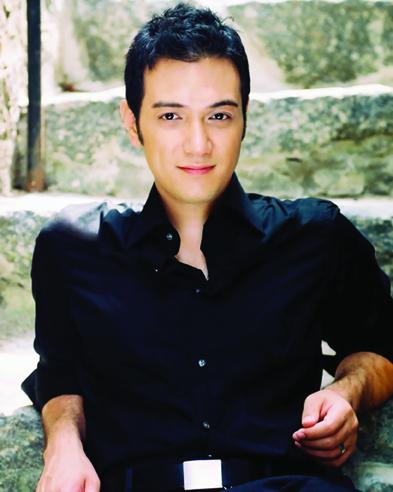
My discovery of Nicholas Phan was a little backwards: I linked from mezzo Jennifer Rivera's blog to his, and only then to his website, where I duly investigated audio clips which inspired me to mark the date for his Carnegie Hall debut this past Friday. Phan's own blog provided me with my homework material: reflections and history on Purcell and Britten, the composers to whose work his recital was dedicated. Carnegie Hall has videos, which I discovered only after the fact, on the preparation of the recital and on Phan's obsession with Britten. It was a program both passionate and (for me, at least) challengingly cerebral, which Phan delivered with vivid, versatile characterization and impressive command of dynamics and phrasing. The complete program, with notes, may be found here.
Labels:
Britten,
Carnegie Hall,
Henry Purcell,
Myra Huang,
Nicholas Phan
Subscribe to:
Posts (Atom)


