|
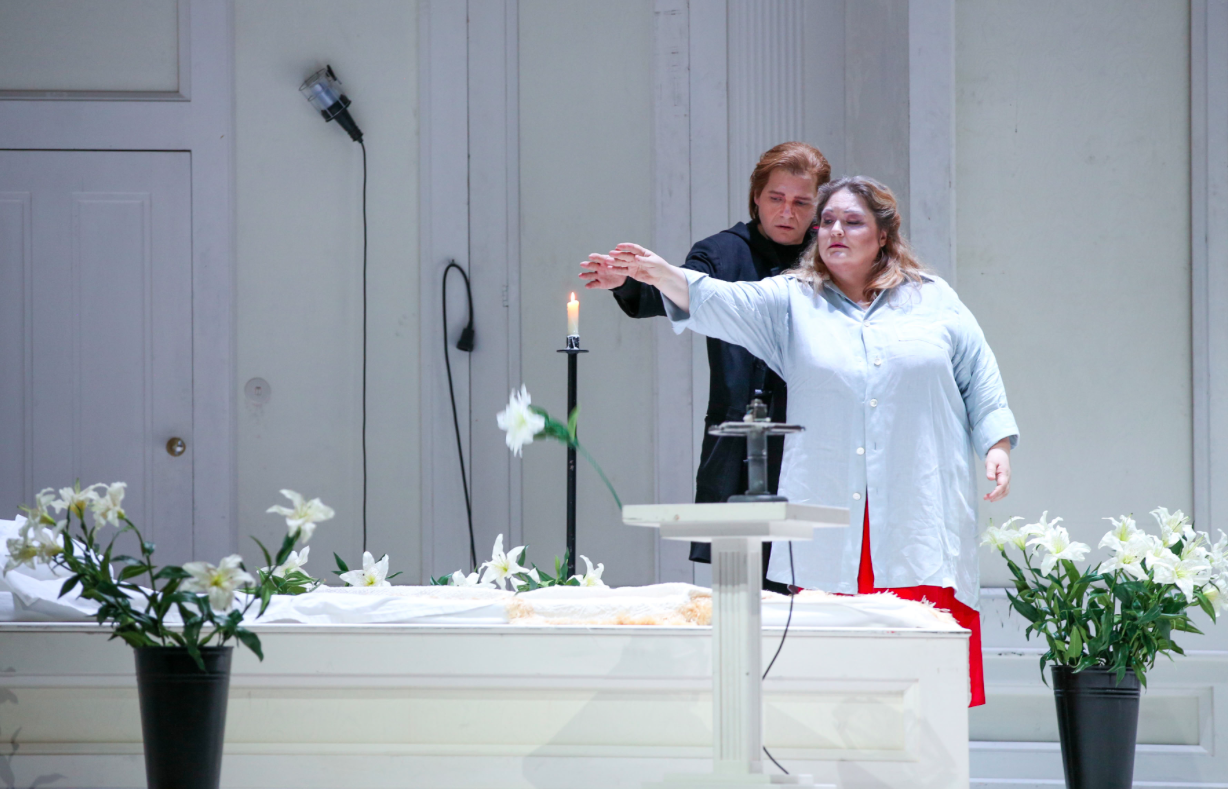
| Oedipus and the Thebans Photo © Oper Frankfurt/Monika Rittershaus |
On Friday, I went to Oper Frankfurt's run of Georg Enescu's rarely performed and richly textured
Oedipe (synopsis
here.) Hans Neuenfels' powerful new production created suspense and ambiguity in this most famous of stories about inevitability. (The fourth act, in which Enescu finds redemption for Sophocles' tragic protagonist, is omitted here.) The space in which the drama takes place is enclosed with layers of equation-covered blackboards which Oedipus tries to read like hieroglyphs. We see Oedipus first thus: as a grown man, an academic deciphering mysteries of systems and probabilities, an observer of the scene in Laios' palace. The cradle is an egg--symbol of life--which remains mysterious and unnamed. But the apparent order praised by the uniformly clad chorus is disrupted by prophecy, and Oedipus resolves to act: to enter the story, rather than observing it; a parallel impulse for the researcher as for the warrior who desires freedom from his fate. But this quest for autonomy is impeded not least by social impulses towards categorization: Shepherd, Priest, King. Costumes from different periods of history (notably in Jocasta's gowns) allude to this dangerous tendency. Even the Erinnye- like rockers who appear to resist control abet the bullying cruelty of Laios. One of the production's most chilling moments is when, as the plagued Thebans beg their king for aid, for an answer to their questions, for an end to their pain, Oedipus finds himself back in a lecture hall, equations crowding the walls, the Thebans crowded onto benches, and he himself powerless in a white coat by the gleaming metal gurney which is only temporarily without the burden of a corpse. But the production does not insist that freedom is illusory; the highly charged interactions between Oedipus and Merope raise the question of whether Tiresias' prophecy functions with the power of suggestion, or indeed is based on insight into character. Is it Oedipus' obsession with fate that drives him, rather than the fate itself? The opera's central question--how free are we?--hangs painfully suspended.